
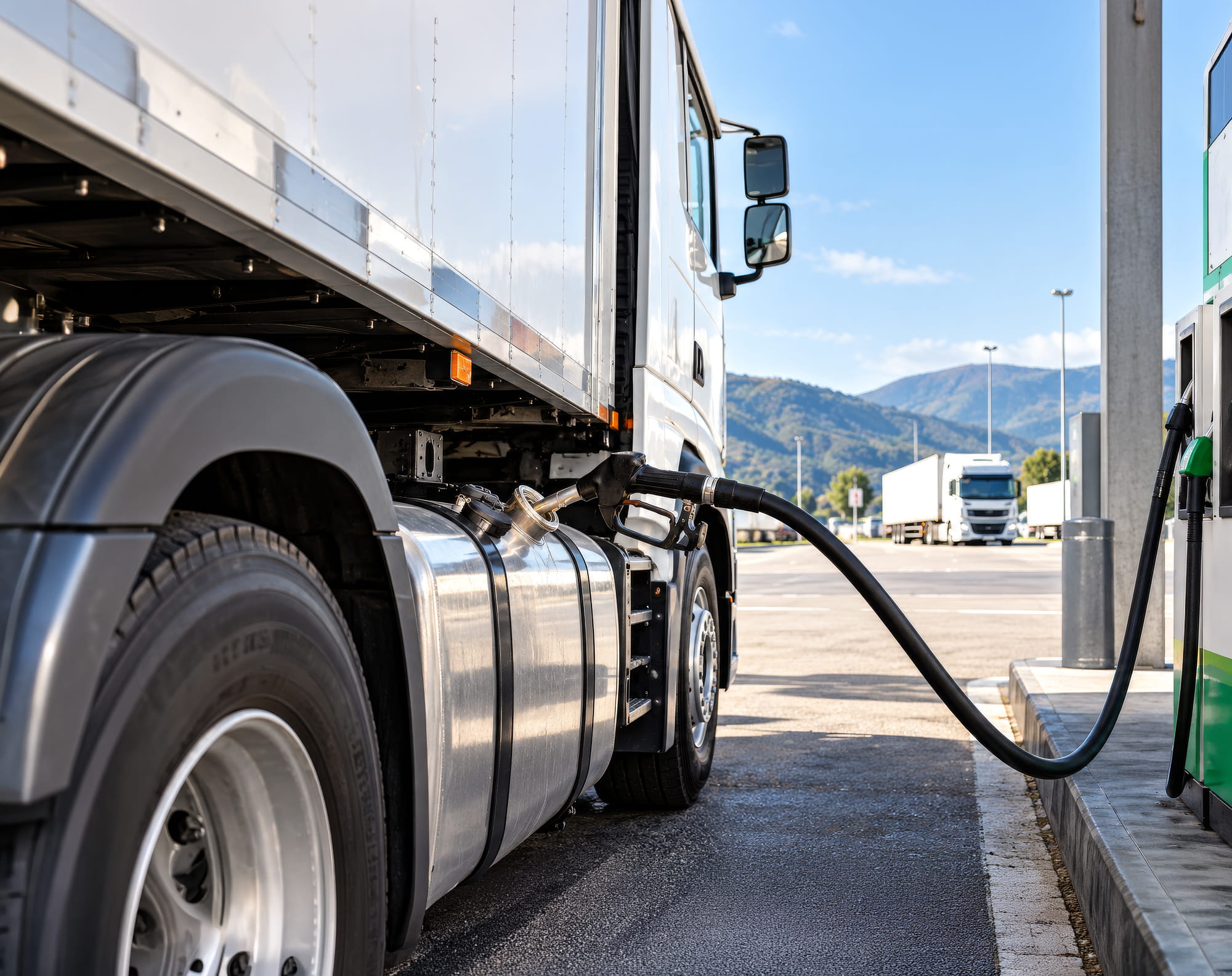
Fuel has always been one of the largest and most visible costs facing fleet operators.
When prices rise, the effect is immediate: operating margins tighten, budgets come under pressure and forecasts quickly become outdated.
That pressure is particularly noticeable at the moment. In the week beginning 19 October 2026, the average UK pump price reached 174.57p per litre for petrol and 199.33p for diesel. The Government’s temporary 5p-per-litre fuel duty reduction is due to remain in place until the end of December, but the default position is for duty to begin increasing again in January 2027.
For fleet operators, this reinforces an uncomfortable reality: fuel prices are volatile, and many of the factors determining them sit entirely outside the control of the business.
However, the amount of fuel a fleet wastes is not outside its control.
Fuel efficiency is an operational issue
Discussions about fuel costs often begin and end with the price paid per litre. Procurement teams compare fuel cards, operators negotiate supplier agreements and businesses monitor changes at the pump.
All of that matters. But the price of fuel is only one part of the equation. The more useful questions are:
- How efficiently is that fuel being used?
- Are vehicles completing unnecessary mileage?
- Are routes creating avoidable delays?
- How much fuel is being consumed through idling?
- Are driving behaviours increasing consumption?
- Are poorly maintained vehicles operating less efficiently?
- Is the business acting on the information it already has?
A small improvement applied consistently across a large fleet can have a meaningful financial impact. Equally, small inefficiencies repeated across hundreds of vehicles and thousands of journeys can quietly become a significant cost.
That is why fuel efficiency should not be viewed simply as a purchasing issue. It is an operational performance issue.
Look beyond MPG
Miles per gallon remains an important measure, but a fleet-wide average rarely tells the whole story.
Two similar vehicles may return very different results because of their routes, loads, condition or how they are driven. A vehicle working in an urban environment cannot fairly be compared with one covering long motorway journeys. Likewise, a driver may appear inefficient when the real problem is congestion, unrealistic scheduling or the vehicle allocated to the job.
The value comes from understanding the context behind the number.
Fleet managers should be able to identify unusual changes in performance and investigate the reason. Has fuel consumption deteriorated gradually? Is one route consistently less efficient? Does a particular vehicle need attention? Are repeated harsh acceleration, excessive speed or prolonged idling contributing to the problem?
The Vehicle Certification Agency highlights smoother acceleration, anticipation and appropriate speed as practical ways of reducing fuel use. It notes, for example, that travelling at 75mph rather than 60mph can use around 18% more fuel.
The purpose of monitoring these behaviours should not be to criticise drivers for every event. It should be to identify patterns, understand their causes and help people improve.
Driver engagement matters
A fuel-reduction programme imposed on drivers is unlikely to deliver lasting results.
Drivers understand the vehicles, routes and pressures they encounter every day. They will often know where time and fuel are being wasted long before it becomes obvious in a management report.
If they are involved in the process, the conversation changes. It becomes less about monitoring individuals and more about improving the operation together.
That may include focused coaching, sharing practical examples, recognising improvement and giving drivers clear feedback they can use. It may also uncover wider issues that cannot be solved through coaching alone, such as impractical routes, excessive waiting time, poor vehicle allocation or unrealistic delivery schedules.
Good data should support a fair conversation. It should distinguish between the behaviour a driver can change and the operational conditions the business needs to address.
Maintenance is part of the equation
Fuel performance can also provide an early indication that something else is wrong.
Changes in tyre pressure, vehicle condition, load, engine performance or maintenance requirements can all affect consumption. If a vehicle’s efficiency begins to decline, that should prompt investigation rather than simply being accepted as a higher fuel bill.
Looking at fuel information alongside maintenance and vehicle data creates a much clearer picture. It allows operators to move beyond reporting what has already been spent and begin identifying why performance is changing.
That is where connected fleet information becomes valuable. Not because it creates another dashboard, but because it helps the business find the cause of an issue and decide what to do next.
Reducing mileage is often the biggest opportunity
The most efficiently driven mile still carries a cost.
Before focusing entirely on how vehicles are driven, operators should examine whether every journey is necessary and whether each vehicle is being used effectively.
Unnecessary mileage can result from poor routing, duplicated visits, incorrect information, failed deliveries or vehicles being sent to jobs for which they are not ideally located.
These are not solely transport problems. They can involve planning, customer service, operations and communication across the wider business.
Reducing unnecessary mileage can therefore deliver benefits beyond fuel savings. It can release vehicle capacity, reduce wear and tear, lower emissions and give drivers more realistic working days.
Data must lead to action
Many fleets already have access to information about fuel consumption, mileage, idling and driving behaviour. The challenge is making sure that information leads to a clear response.
A monthly report showing that fuel efficiency has declined is of limited value if nobody is responsible for investigating the cause. Likewise, highlighting excessive idling will not reduce costs unless the business understands where it is happening, why it is happening and what can realistically be changed.
The most effective approach is to focus on exceptions and trends rather than overwhelming teams with every individual event.
Which vehicles have changed significantly from their normal performance? Which routes consistently produce higher consumption? Where is idling increasing? Which drivers have improved following coaching, and where is further support needed?
The objective should be to create a manageable list of actions, assign responsibility and then measure whether those actions have worked.
Fuel data should not simply explain where the budget went. It should help prevent unnecessary cost from appearing in the next one.
Focus on what can be controlled
Fleet operators cannot control global energy markets, taxation or the wholesale cost of fuel.
They can control how well journeys are planned, how vehicles are maintained, how drivers are supported and how quickly inefficiencies are identified.
The organisations that manage fuel costs most effectively will not necessarily be those that secure the lowest price per litre. They will be the ones that understand where every litre is going—and whether it is creating value.
I’d be interested to hear how other fleet operators are approaching this. With fuel prices under renewed pressure, where do you see the greatest opportunity: purchasing, driver engagement, route planning or better use of fleet data?